Adaptation Pathways to Climate Change through Management and Restoration of Estuarine Ecosystems
Adaptation pathways to climate change through management and restoration of estuarine ecosystems
- Dates: 01/06/2026 – 31/07/2026
- Hours of study: 8 ECTS
- Price: 300€
- Scholarships Enrolment: 9 scholarships of 300€ (Apply for Banco Santander scholarship) (Applying for the scholarship does not exempt from the pre-enrolment process)
- Application deadline: 20/05/2026
- Language: English (subtitles in English, Spanish, German and Portuguese).
- Modality: Virtual Asynchronous (T) – Synchronous (Pr)
- Key dates:
- Pre-registration: until 22/05/2026
- Admission: 10/04/2026 – 26/05/2026
- Registration: 14/04/2026 – 29/05/2026
- Requirements: Internet
- Evaluation system: Online + Final Programme Project (TFP)
- Type of certificate: Microcredential certified by the University of Cantabria
Read carefully the ENROLMENT INSTRUCTIONS
The learning pathway ‘Adaptation to Climate Change through the management and restoration of estuarine ecosystems’, is composed of three MOOCs that address information on:
- Climate Change related services provided by estuaries and estuarine ecosystems, and quantification tools to assess them.
- Risk associated with climate change in coastal areas and estuarine-based adaptation strategies.
- Financial tools to support estuary restoration and conservation projects as adaptation measures to combat the consequences of climate change.
This course is intended for professionals, graduates and postgraduates interested in deepening their knowledge of the role of estuarine ecosystems as an adaptation measure in the context of climate change. As well as students coming from Biology, Environmental Sciences, Civil Engineering, Environmental Engineering, Economics, Marine Sciences, Geography, Meteorology, Physics, Renewable Energies, etc.
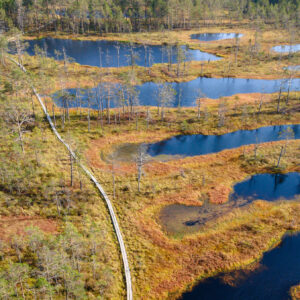
Climate change services provided by estuaries and estuarine ecosystems and quantification tools
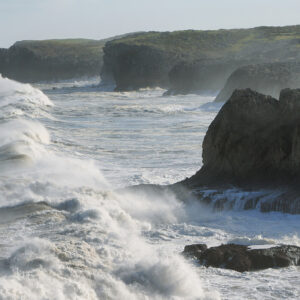
Climate change risk in coastal areas and estuarine-based adaptation strategies
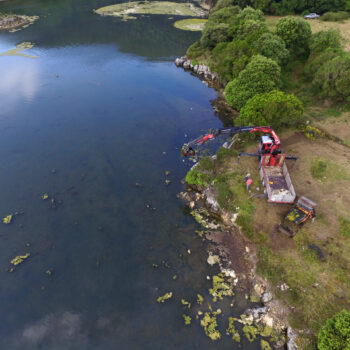
Financial tools to support estuaries restoration and conservation projects

Final Programme Project
Creative Commons education materials created by the LIFE ADAPTA BLUES project (LIFE18 CCA/ES/001160, ‘Adaptation to climate change through management and restoration of European estuarine ecosystems’), coordinated by the Environmental Hydraulic Institute of the University of Cantabria (IHCantabria-UC).